
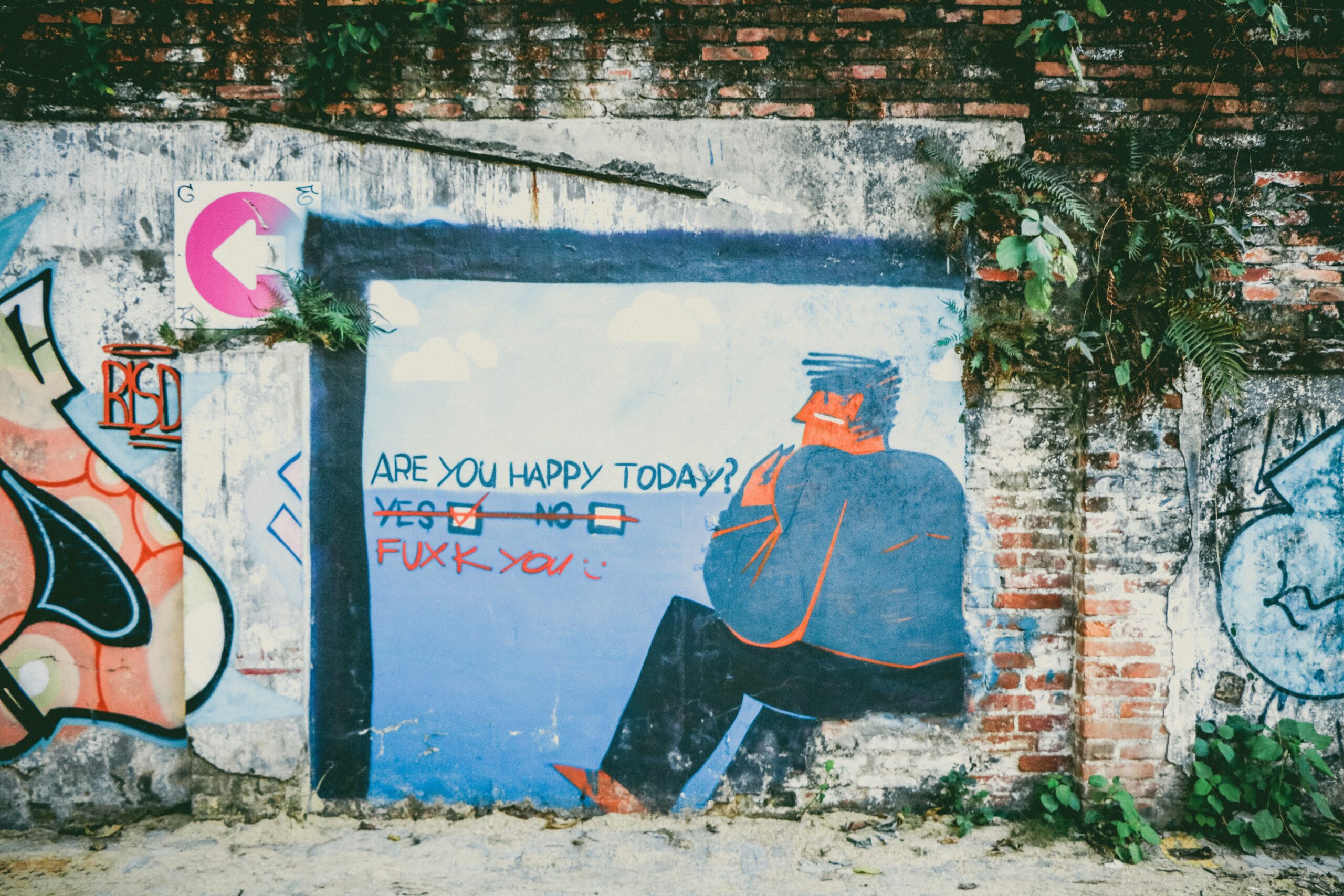
A guide to understanding the three forces that will either carry you through life transition – or keep you standing still.
There is a particular kind of knowing that arrives quietly.
Not as a dramatic revelation. Not as a crisis – though sometimes that follows. It arrives as a persistent, low-level awareness that something in your life is no longer fitting the way it once did. That the shape of things – your work, your relationships, your sense of self, your daily rhythms – has shifted, or needs to. That you are standing at the edge of something you cannot yet name.
You know you need to change. You just do not know where to begin.
If that is where you are, this is written for you.
The Space Between Who You Were and Who You Are Becoming
Transition is not an event. That is the first and most important thing to understand.
We tend to speak of life transitions as moments – the job loss, the relationship that ends, the diagnosis, the milestone birthday, the quiet morning you wake up and realise the life you have been living is no longer the one you are meant for. And those moments are real. They are significant. But they are not the transition itself.
Transition is the process that follows. The interior journey of becoming someone who is capable of living the next chapter – before that chapter has made itself fully visible.
And it is here – in this in-between space, this threshold – that most people get stuck. Not because they lack courage or capability. But because they do not yet understand the forces at work within them. They are trying to navigate a profound inner transformation with the tools of the old life. And those tools, however well they served before, were not built for this.
There are two kinds of transition most of us will move through in a lifetime.
The first is the general human life cycle – the transitions that are woven into the fabric of being human. Adolescence into adulthood. The building years. The midpoint reckoning. The years of reassessment and reimagining. These are not surprises. They are the architecture of a human life. And yet we arrive at each one largely unprepared, because our culture is remarkably poor at acknowledging them for what they are – not inconveniences to be managed but profound invitations to become more fully ourselves.
The second is the incidental cycle – the transitions that arrive uninvited. The disruption you did not choose. The loss, the change, the ending that restructures everything. These do not follow a schedule. They do not wait for readiness. They arrive and they demand a response – and the quality of that response determines everything about what comes next.
Both kinds of transition share the same essential requirement: you must be willing to understand yourself differently. To release the version of you that got you here, in order to become the version that is needed for what comes next.
That is not a small thing. It may be the most significant work a human being ever undertakes.
And it does not happen in a vacuum. It happens through three forces – three capacities that are either alive and working within you, or dormant and waiting to be reclaimed.
You do not navigate transition by having all the answers. You navigate it by developing the right relationship with what is already moving inside you.
The Forces Already At Work Inside Your Transition
The First Force – DISRUPTION
Every transition begins with a disruption. Something that interrupts the loop. That breaks the rhythm of autopilot and creates what I call a productive gap – a moment of pause where something new can enter.
Sometimes we choose the disruption. A deliberate pattern interrupt. An honest audit of where we are versus where we sense we are meant to be. The uncomfortable conversation we have been avoiding with ourselves or with someone else.
Sometimes the disruption chooses us. Life removes what was keeping us small. Closes the door to the room we were too afraid to leave. Redirects us – sometimes gently, sometimes not – toward the version of ourselves that has been waiting patiently in the wings.
In either case, the disruption is not the problem. It is the beginning of the solution. The question is never why is this happening. The question – the one that opens rather than contracts – is what is this making possible.
The person who learns to work with disruption rather than resist it does not become immune to difficulty. They become extraordinarily capable of moving through it. They develop what I think of as a pattern of attentiveness – a way of staying curious about what is arising, catching the signals early, before they have to shout.
This is the first force. And it is available to you – not as something that happens to you, but as something you can learn to work with consciously.
The Second Force – INTUITION
In the middle of transition, the thinking mind becomes unreliable. Not because it is broken – but because it is working with the map of the old territory. And you are standing in new territory now.
This is where the second force becomes not just useful but essential.
Your intuition is the sum of everything you have ever experienced, observed, felt and integrated – processed at a depth your conscious mind cannot match. It is your most sophisticated intelligence. And it has been available to you your entire life, quietly registering what was true before the evidence arrived, pointing you toward what was right before you could explain why.
Most of us, by the time we arrive at a significant life transition, have spent years overriding this intelligence. Choosing the logical option over the known one. Waiting for external permission before trusting what was already present. Outsourcing our knowing to people and systems that could not possibly understand what we understand about our own life.
Transition asks you to stop.
Not to abandon reason – but to bring your intuition back into the conversation. To develop, perhaps for the first time, a genuine and trusting relationship with your own deep knowing. Because the next chapter of your life will not be found through analysis alone. It will be found by listening – carefully, courageously, consistently – to the part of you that already knows.
This is the second force. And reclaiming it may be the single most transformative act of your transition.
The Third Force – ENERGY
Everything you do – every decision, every relationship, every act of work and creation – is shaped by the energy you bring to it. Not as a concept. As a measurable, palpable, completely real force that either supports your becoming or quietly undermines it.
Here is what transition reveals with uncomfortable clarity: you cannot move into a new chapter of your life while operating at the frequency of the old one. You cannot build something genuinely new from a place of depletion, misalignment, or chronic disconnection from who you actually are.
The energy you carry is your most powerful currency. And most of us, by the time we recognise we need to change, have been running that currency on autopilot – leaking it into places it does not belong, depleting it in service of a life that was never the full truth of us, and wondering why the effort never quite produces the life we sense is possible.
Managing your energy is not a luxury. In transition, it is the work. Because when your energy is clear, coherent, and genuinely aligned with who you are becoming – your decisions sharpen, your relationships clarify, your work finds its true expression, and the next step, which felt invisible before, begins to reveal itself.
This is the third force. And learning to steward it with intention will change not just your transition – but everything that comes after.
Disruption cracks the door open. Intuition tells you which way to walk. Energy determines whether you have the capacity to move.
This is When The Magic Becomes Real
This is where it becomes genuinely powerful.
These three forces are not separate practices to be adopted one at a time. They are an interconnected system – and in the context of life transition, they work together in a way that creates something far greater than any one of them could produce alone.
Disruption without intuition is chaos. You are shaken loose from the old pattern but have no reliable inner compass to navigate what comes next. You move – but not necessarily toward anything that is truly yours.
Intuition without energy is frustration. You know, with great clarity, what needs to change. But you do not have the energetic resources to act on it. The knowing sits inside you, unused, while the gap between where you are and where you sense you are meant to be quietly widens.
Energy without disruption or intuition is effort. You are working hard, showing up, producing – but from the same frequency, in the same direction, toward a destination that was never the full truth of you.
But when all three are present – when you are working consciously with disruption as a catalyst, with intuition as your compass, and with your energy as a resource you are actively stewarding – something extraordinary becomes possible.
You begin to move through transition not as something happening to you, but as something you are participating in. Consciously. Courageously. With a growing sense that the life on the other side of this is not a mystery to be feared but a becoming to be trusted.
The three forces find each other. And when they do – that is when the magic becomes real.
You Do Not Need the Full Picture. You Just Need This
If you are standing at the threshold – knowing you need to change but not yet knowing how – here is what I want you to understand:
You do not need to have the full picture before you begin. You do not need certainty. You do not need to know what the other side looks like before you are willing to step toward it.
What you need is to begin developing your relationship with these three forces. To start noticing where disruption is already present in your life and what it might be asking of you. To create enough stillness to hear what your intuition has been trying to tell you. To take an honest look at your energy – where it is going, what is draining it, and what might restore it.
This is not dramatic work. It is quiet, consistent, deeply personal work. And it begins not with a grand plan but with a single, honest question:
What do I already know – that I have not yet been willing to act on?
That question, held with genuine curiosity and without judgement, is where every meaningful transition I have ever witnessed has begun.
A Different Kind of Guide For a Different Kind Of Journey
I am Jacinta Starick. And this – all of this – is what I have built Begin a Conversation around.
Not as a rigid program to be completed or a one-size-fits-all system to be followed. But as a genuine, personalised, deeply human conversation about where you are, what is moving in you, and what becomes possible when you begin to work with these forces rather than against them.
For those who want a more structured journey through this work, the Begin a Conversation workbook offers exactly that – a guided, self-paced experience through the three forces, designed to meet you exactly where you are.
I come to this work not as a distant expert but as someone who has lived her own transitions. Who has stood at her own thresholds, felt her own disruptions, learned – sometimes the hard way – to trust her own intuition, and done the ongoing, honest work of managing her own energy.
I know this territory. And I know that no two journeys through it look the same.
What I offer is not a map. Maps are fixed, and your transition is not. What I offer is companionship through the terrain – the kind that helps you develop your own capacity to navigate, so that every transition that follows becomes something you meet with increasing grace, clarity and trust in yourself.
If something in this has landed – if you have recognised yourself somewhere in these pages – that recognition is not an accident.
It is the beginning of a conversation.
You already know something needs to change. The question is whether you are ready to begin.
Photo by Jeff Chien on Unsplash
0 Comments